
She flunked math. Now she’s taking on how America learns it.
A failed exam. Eleven math books. A global user community. Norwegian founder Vibeke Gwendoline Fængsrud is bringing the lessons behind House of Math into U.S. classrooms.
Vibeke Gwendoline Fængsrud failed high school math. Today, she holds a master’s degree in mathematics, has written 11 math books and leads a company built around the problem she once faced: trying to learn something new without understanding what came before it.
Her next chapter is unfolding in the United States, where House of Math is bringing its approach into American schools. The ambition is to change how students find and rebuild the foundations holding them back.
That journey began with a book. After struggling through mathematics text she could not understand, Vibeke found Basic Mathematics: 219 pages that started with numbers. This time however, she could follow along. She finished it feeling victorious.
The experience gave her an insight that would go on to shape two decades of work. A student stuck on today’s lesson may need help with something taught years earlier.
“I didn't lack the ability to learn, I was just missing the foundations to learn. I built House of Math because no student should mistake a gap in their knowledge for a limit on their potential.”
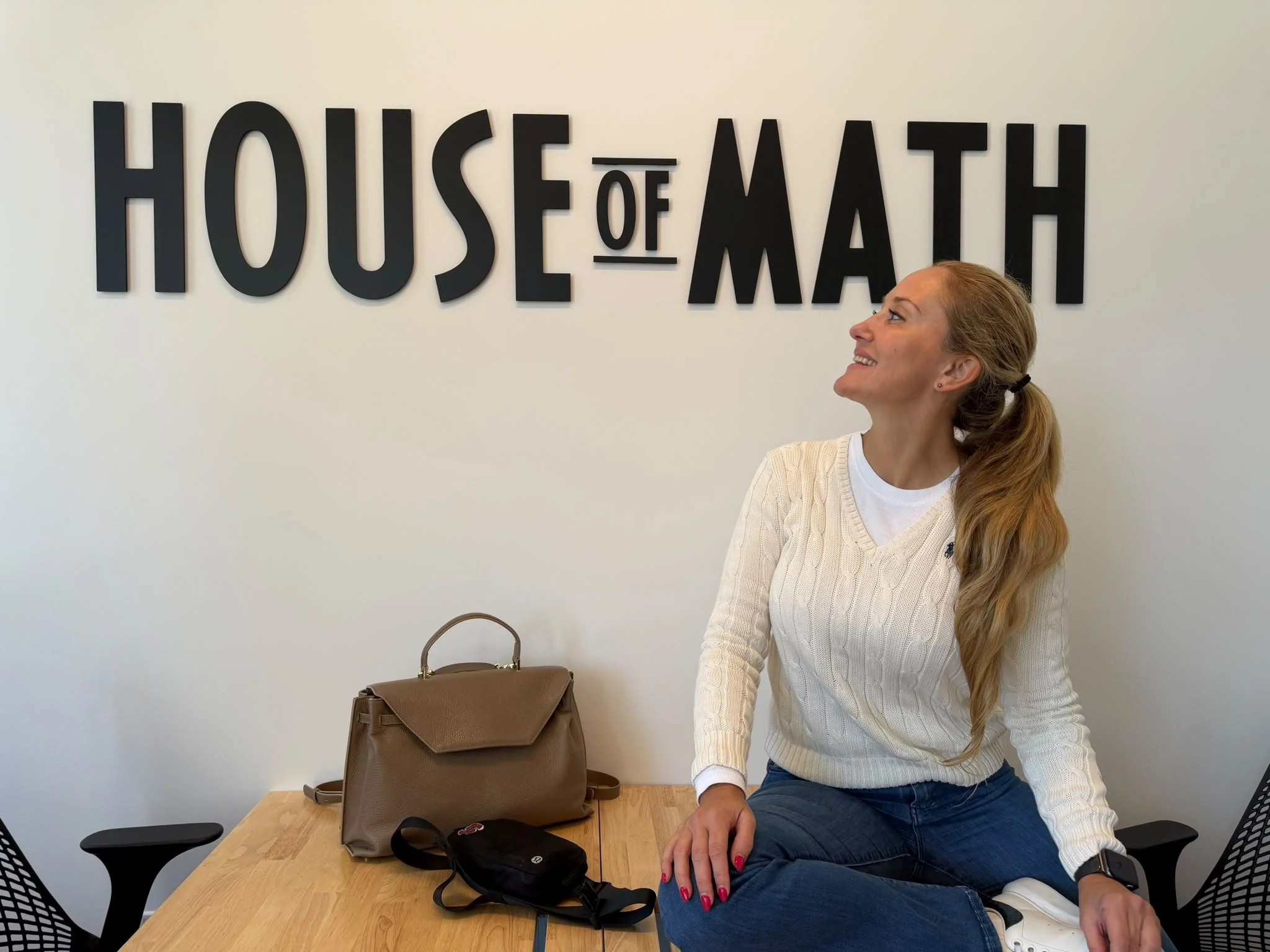
Twenty years of insight. A 90 second breakthrough.
Today, House of Math turns that insight discovered 20 years ago into a personalized learning path. At its heart is MIND AI, a proprietary AI model built around a connected map of mathematical concepts and the foundations each depends on. It maps a student’s knowledge in approximately 90 seconds, identifies gaps that can reach back to first grade and continuously adapts their learning path as they progress.
A student struggling with algebra, for example, may still be uncertain about fractions. More algebra practice can leave that earlier gap untouched. House of Math uses its mapping to help students find where to start, then builds a Mastery Track that connects the foundations they need with the curriculum they are studying.
Short animated videos, exercises and games support that journey. An AI tutor provides additional guidance through questions and explanations, helping students work through the reasoning behind a solution.
Vibeke compares the structure behind the platform to a periodic table for mathematics: small learning units connected and assembled into a path for each student. The goal is to give students a way forward and teachers a clearer view of where support is needed.
Built in Norway. Ready for the American classroom.
Vibeke founded House of Math as a tutoring business in Norway in 2006. When the pandemic disrupted that business, the team accelerated a shift toward a digital platform they launched in 2020.
Building it meant bringing assessments, curricula, animations, games and proprietary AI together into one learning experience.
“The complexity is in making every part work together: understanding what a student knows, identifying what is missing and connecting that insight to the right teaching at the right moment. We have built the system behind that journey so the student can focus on learning,” she says.
Since going digital, House of Math has recorded 19.7 million learning sessions and 508,700 hours of math learning, the equivalent of roughly 300 work years. Students worldwide have earned 854 million Math Points, the platform’s measure of progress across videos, games, quizzes and tests. Just a few years into its digital journey, House of Math is already punching above its weight class with a global learning footprint to show for it.
The next chapter brings that learning approach into the American classroom. LaunchED has selected House of Math as its primary supplemental math education platform, giving the company a foothold in U.S. schools and an opportunity to build on its global traction.
The partnership begins during the 2026-2027 school year with an initial rollout involving 3,300 students. It creates an opportunity to document engagement, progress and efficacy, and support a phased commercial expansion. The wider partner network provides a potential path to scale beyond the initial rollout to more than 90,000 students.
The company has also earned international recognition, including an Impact Award at the AI Summit at Stanford and selection for the Eduventures GBA Fellowship. Vibeke was named Tech Star of the Year at Norway’s HER Awards.
For a founder driven by ambition and resilience, these milestones mark how far she’s come. The next challenge is turning years of product development into lasting adoption in a new market.

Vibeke settling into life in Silicon Valley.
Sixteen days. Two suitcases. Silicon Valley.
Taking that next step required a personal leap. With a funding round approaching, Vibeke worried that Norway’s exit tax could make a later relocation difficult if the company’s valuation increased. She says she had 16 days to leave.
In March 2025, she arrived in California with two suitcases and a golf bag.
Leaving behind her family, friends, colleagues and a network built over years. Ahead was a market with enormous possibilities and an everyday life she had to build from scratch.
“I had built my life and my network in Norway. Moving meant starting again while leading the company into a new market. That was a much bigger challenge than packing two suitcases but I knew why I was doing it,” she says.
Friendships have gradually made California feel like home. Professionally, Silicon Valley has offered exactly what she came for: a willingness to make introductions, share contacts and explore ambitious ideas.
“In Norway, people often ask, ‘What if it goes wrong?’ Here, they ask, ‘What if it works?’”
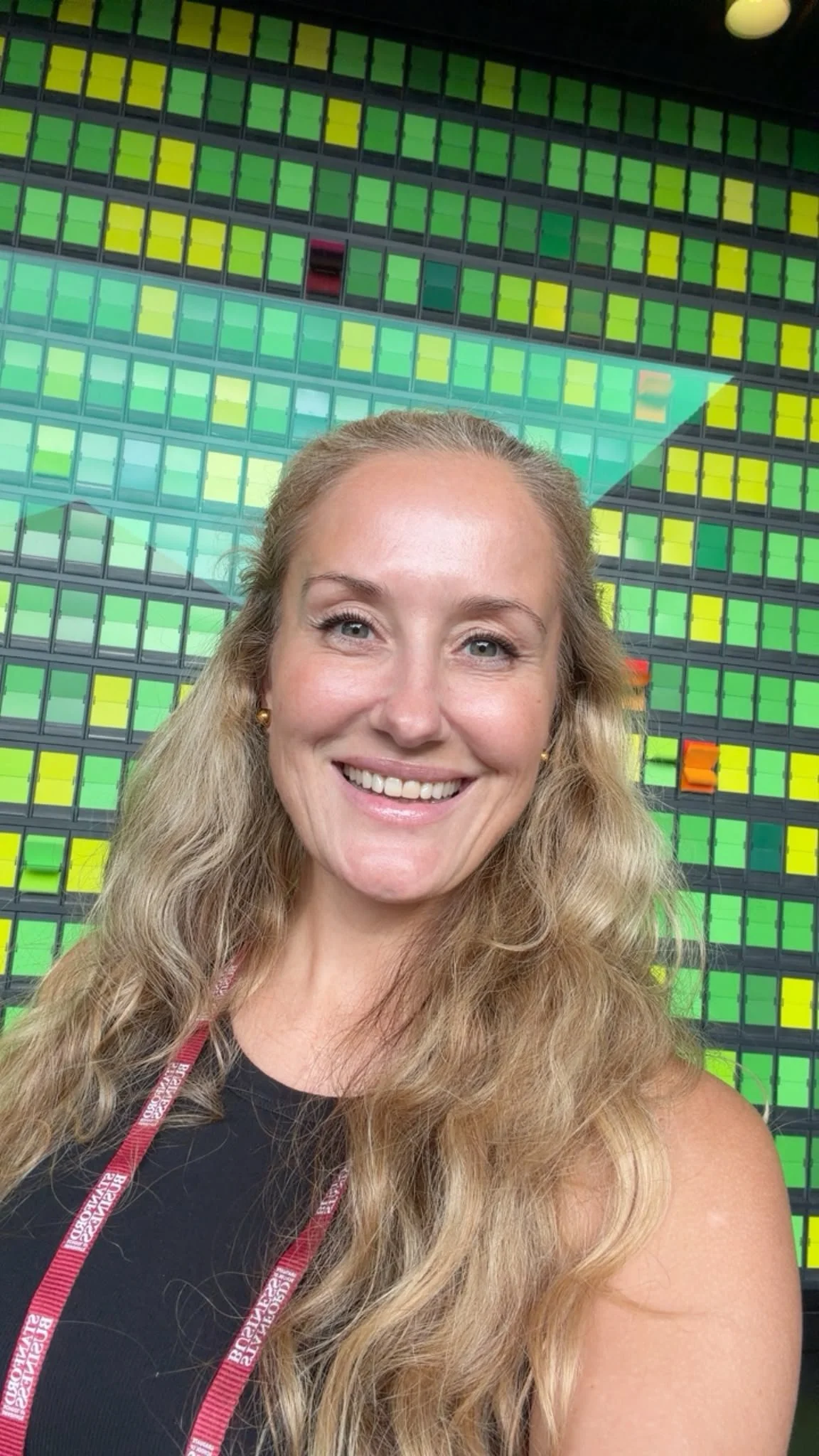
A Nordic founder with an American ambition
Vibeke values what Nordic Innovation House stands for: bringing Nordic founders together in Silicon Valley, where bold ideas meet the people and opportunities that can help them grow.
For House of Math, the next step is to build on its school partnerships, expand into more U.S. school districts and reach more students and families directly.
The ambition traces back to a familiar feeling: opening a math book and believing you cannot do it. Vibeke knows how much can change when you finally find the right place to begin.
Her advice to another Nordic founder considering the move? “Look forward to it.” Expect hard work and uncertainty, but also open doors and people willing to ask how far your idea could go.
She once needed 219 pages to see a way forward. Now she is building a company to help millions of students find theirs.